
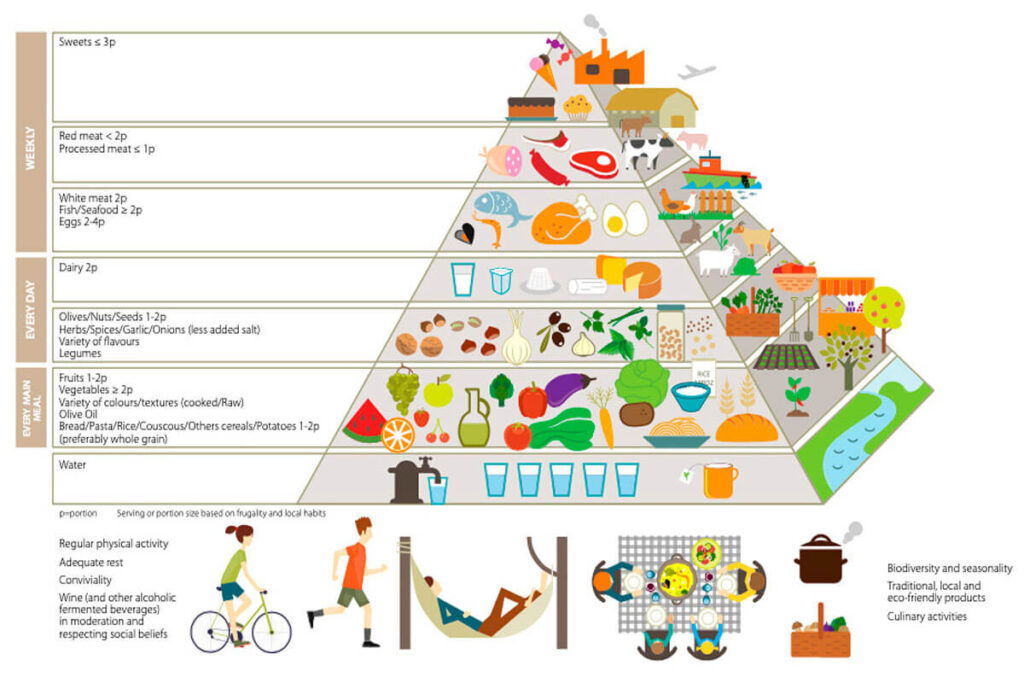
Diet plays a significant role in slowing the progression of macular degeneration, and the Mediterranean diet, in particular, offers notable benefits for managing age-related macular degeneration.
In this article, I will first introduce the Mediterranean diet and then explore its specific benefits for those affected by macular degeneration.
What is the Mediterranean Diet?
The Mediterranean diet is based on the eating habits of regions along the Mediterranean coast, particularly Southern Italy, Greece, and Crete. These areas are known for having low rates of chronic diseases and some of the highest life expectancies in the world, despite relatively modest medical care. Researchers and nutrition experts studied the diets of these regions and created the Mediterranean diet as a way to promote long-term health and well-being.
The Mediterranean diet is not just about food; it also emphasizes the social habits of these regions. The recommendations are often depicted in the form of a pyramid, which organizes foods by their recommended frequency of consumption.
At the base of the pyramid, the focus is on daily physical activity and meals shared in social settings, along with drinking plenty of water. These are considered the most important aspects of the diet.
The second tier includes foods to be consumed at every meal. These include:
Olive oil
2 servings of colorful vegetables (cooked or raw)
1–2 servings of whole grains (bread, pasta, rice, couscous, potatoes)
1 serving of fruit
The third tier recommends foods to be consumed daily but in smaller amounts. These include:
Olives, nuts, herbs, spices, garlic, onions, and legumes (1–2 servings per day)
The fourth tier includes dairy products, with a recommendation of no more than 2 servings per day.
The upper three levels of the pyramid represent foods to be consumed less frequently, in decreasing amounts:
Fifth tier: 2 servings of white meat, 2–3 servings of fish and seafood, and 2–4 servings of eggs per week
Sixth tier: Red meat, limited to one serving per week, and processed meats, no more than one serving every two weeks
Seventh (top) tier: Sweets, which should be limited to no more than three portions per week
In addition to supporting general health, the Mediterranean diet is especially beneficial for slowing the progression of age-related macular degeneration (AMD). It is also recommended for individuals with certain genetic retinal diseases, such as Stargardt disease, Bietti’s crystalline dystrophy, retinitis pigmentosa, and other similar conditions.
Benefits of the Mediterranean Diet for Macular Degeneration
Scientific studies have proven the effectiveness of antioxidant vitamins, minerals, and omega-3 fatty acids in slowing the progression of age-related macular degeneration (AMD). The AREDS and AREDS-2 studies, in particular, have shown that these nutrients are especially effective in slowing the progression of dry AMD. Additionally, other research has demonstrated that omega-3 fatty acids, specifically DHA and EPA, offer protective benefits against wet macular degeneration, further highlighting the importance of these nutrients in managing the disease.

The Mediterranean diet, rich in antioxidants, has been investigated for its impact on age-related macular degeneration (AMD) in studies like AREDS and AREDS-2. These studies have found that following the Mediterranean diet slows the progression of both dry and wet AMD, with a more significant effect on the dry type. Furthermore, the studies also highlighted that regular fish consumption enhances this protective effect, providing additional benefits for those with macular degeneration.
For more detailed information about the disease, please refer to my article titled “ Macular Degeneration: Understanding its Origins, Symptoms, and Treatment.“
Due to its protective effects on age-related macular degeneration, individuals with macular degeneration or a family history of the condition should follow the Mediterranean diet recommendations. Other foods that can help protect against macular degeneration include saffron, turmeric, and maqui berries. Additionally, those at risk should avoid smoking.
The image was sourced from The New Modern Mediterranean Diet and The Food Pyramid page.

What Is Optogenetics? New Hope in the Treatment of Vision Loss
I consider the awarding of the 2026 Nobel Prize in Physiology or Medicine for work [...]
Devamını OkuyunOct
Can Your Eyes Improve If You Stop Wearing Glasses?
Sometimes patients or parents ask the following question: “Can the eyes improve if someone stops [...]
Devamını OkuyunOct
When Are Flashes of Light in the Eye Dangerous?
Sudden bright lights in the eye, short flashes similar to lightning, or a sudden sensation [...]
Devamını OkuyunSep
What Causes Computer-Related Eye Strain?
Complaints of eye strain have increased noticeably as computers and other digital screens have become [...]
Devamını OkuyunAug
What Causes Straight Lines to Look Wavy?
Straight lines may sometimes no longer appear straight to the eye. If door frames, window [...]
Devamını OkuyunAug
What Is Smartphone Blindness? Can It Cause Temporary Vision Loss?
Have you ever noticed short-term vision loss in one eye after looking at your phone [...]
Devamını OkuyunJul
How Can I Tell If My Eye Prescription Has Increased?
Your eye prescription may change over time. Sometimes this change is not noticed immediately; instead, [...]
Devamını OkuyunJul
What Causes a Sudden Curtain-Like Shadow Over the Eye?
If you suddenly experience a darkening, shadowing, or closing sensation as if a curtain has [...]
Devamını OkuyunJul