
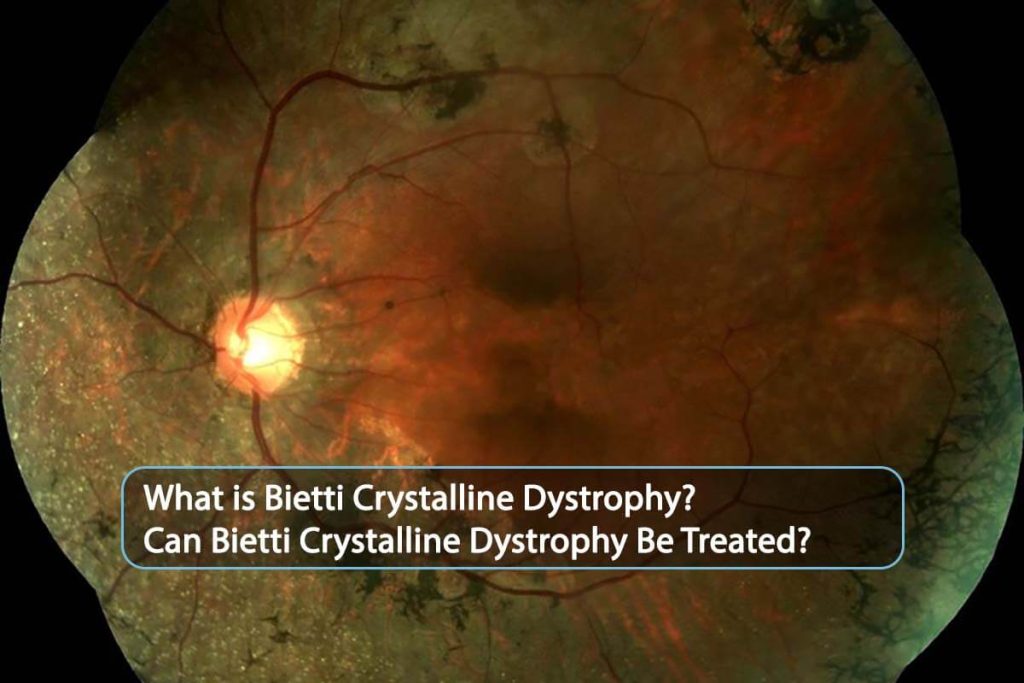
Bietti Crystalline Dystrophy, identified by Italian physician Dr. Lucas Bietti in 1937, is a rare eye disease characterized by crystal formation in the cornea and retina, impacting vision. The condition was named after Dr. Bietti due to its discovery in individuals presenting vision-related complaints. Given its infrequent occurrence, treatment options for Bietti Crystalline Dystrophy are challenging, as there is currently no known cure. Management strategies focus on symptom alleviation and slowing down disease progression. This rare disorder prompts ongoing research, offering the potential for tailored interventions to enhance the quality of life for affected individuals and preserve their remaining vision.
Bietti’s Crystalline Dystrophy: Unraveling a Rare Autosomal Recessive Disease
Bietti’s Crystalline Dystrophy is an uncommon autosomal recessive disorder characterized by distinctive yellow-white crystal deposits, disruptions in the retinal pigment epithelium, and sclerotic changes visible in the retina, occasionally extending to the cornea. Typically, symptoms of this condition manifest after the age of 20. In its advanced stages, individuals with Bietti’s Crystalline Dystrophy may experience a significant decline in visual acuity, night blindness, a reduction in the field of vision, and impairment of color vision.

Causes of Bietti’s Crystalline Dystrophy
Bietti’s Crystalline Dystrophy is entirely of genetic origin, linked to defects in the CYP4V2 gene. Unlike some diseases, no environmental factors contribute to the development of this condition.
Who Gets Bietti’s Crystalline Dystrophy?
Given its rarity, the precise incidence of Bietti’s Crystalline Dystrophy remains unclear. This disease affects both men and women equally. However, the risk is elevated in cases of consanguineous marriages. Additionally, closed societies practicing endogamy, wherein individuals marry within their community, may experience a higher incidence of genetic diseases, including Bietti’s Crystalline Dystrophy.
Symptoms of Bietti’s Crystalline Dystrophy
The onset of Bietti’s Crystalline Dystrophy is marked by night vision impairment. Subsequently, individuals may notice a decline in visual acuity and a narrowing of their visual field. In the advanced stages, the disease progresses to the point of legal blindness, underscoring the severity and impact of this condition on an individual’s vision.
Diagnosis of Bietti’s Crystalline Dystrophy
Bietti’s Crystalline Dystrophy is diagnosed through a comprehensive examination utilizing various imaging techniques. Characteristic lesions and crystals are observed through Optical Coherence Tomography (OCT), color fundus photography, and fundus autofluorescence imaging following eye drop administration. In cases where the diagnosis is uncertain, additional confirmation can be achieved through electrophysiological tests and genetic testing.
Treatment Options for Bietti’s Crystalline Dystrophy
Since its discovery in 1937, there is currently no definitive treatment for Bietti’s Crystalline Dystrophy. However, ongoing research aims to uncover potential therapeutic interventions based on the insights gained from diagnosed cases. One approach to slowing down the progression of the disease involves the use of Platelet-Rich Plasma (PRP). This supportive treatment method, employed by experts like Assoc. Prof. Giray Ersöz, provides patients with time while researchers strive to develop more conclusive treatment strategies.
Academic Articles I Wrote About Bietti Crystalline Dystrophy
Catching Bietti Crystalline Dystrophy Early
Summary: Published in the prestigious U.S. magazine “Retina Today,” this study delves into the findings of a 12-year-old patient diagnosed with Bietti’s Crystalline Dystrophy. The article underscores that while this disease typically manifests after the age of 20, early detection reveals more pronounced retinal findings. The study sheds light on the importance of timely diagnosis in understanding and managing Bietti’s Crystalline Dystrophy.

What Is Optogenetics? New Hope in the Treatment of Vision Loss
I consider the awarding of the 2026 Nobel Prize in Physiology or Medicine for work [...]
Devamını OkuyunOct
Can Your Eyes Improve If You Stop Wearing Glasses?
Sometimes patients or parents ask the following question: “Can the eyes improve if someone stops [...]
Devamını OkuyunOct
When Are Flashes of Light in the Eye Dangerous?
Sudden bright lights in the eye, short flashes similar to lightning, or a sudden sensation [...]
Devamını OkuyunSep
What Causes Computer-Related Eye Strain?
Complaints of eye strain have increased noticeably as computers and other digital screens have become [...]
Devamını OkuyunAug
What Causes Straight Lines to Look Wavy?
Straight lines may sometimes no longer appear straight to the eye. If door frames, window [...]
Devamını OkuyunAug
What Is Smartphone Blindness? Can It Cause Temporary Vision Loss?
Have you ever noticed short-term vision loss in one eye after looking at your phone [...]
Devamını OkuyunJul
How Can I Tell If My Eye Prescription Has Increased?
Your eye prescription may change over time. Sometimes this change is not noticed immediately; instead, [...]
Devamını OkuyunJul
What Causes a Sudden Curtain-Like Shadow Over the Eye?
If you suddenly experience a darkening, shadowing, or closing sensation as if a curtain has [...]
Devamını OkuyunJul