
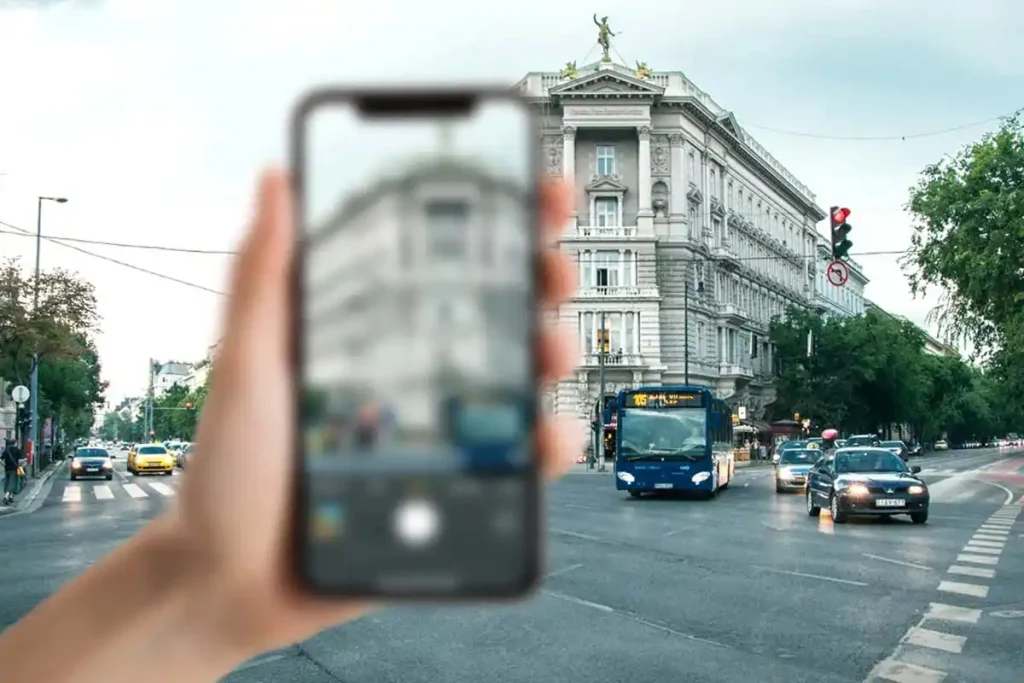
Hyperopia is one of the most common vision problems seen both in Türkiye and around the world. It is also commonly known as farsightedness. People with hyperopia can usually see distant objects more clearly, while nearby objects may appear blurred.
What Is Hyperopia (Farsightedness)?
Hyperopia is an eye condition that occurs when light refracted by the cornea and lens focuses behind the retina instead of directly on it. This causes difficulty seeing nearby objects clearly.
Although hyperopia may develop with age, it often begins during childhood. In people with hyperopia, the eyeball may not grow enough and may be smaller than normal.
People who have difficulty with near vision often say that while reading, letters or lines seem to shift, or letters appear to overlap.
Patients with hyperopia may also complain of pain around the eyes and headaches after long periods of reading or computer use.

Symptoms
The symptoms of hyperopia are usually noticed as difficulty seeing nearby objects clearly. However, symptoms may not appear in the same way in every person.
When hyperopia is mild, symptoms may not be noticed because the eye can compensate by focusing. However, difficulties may occur during near-vision activities such as prolonged focusing, reading, writing or computer use.
Symptoms of hyperopia may include:
- Blurred vision when looking at nearby objects,
- The need to squint to see clearly,
- Eye strain and headache during near-distance tasks such as reading, writing or computer use,
- Burning, stinging or pain in the eyes,
- Redness around the eyes and eyelid margins, sometimes with watering,
- Frequent blinking,
- Difficulty focusing, especially when focusing on near objects,
- Blurred night vision.
Causes
Normally, the cornea and the natural lens of the eye should refract light so that it focuses directly on the retina. However, when the eyeball is shorter than normal, the cornea is not curved enough, or the eye does not refract light sufficiently, the image focuses behind the retina. As a result, especially nearby objects appear blurred.
This condition is usually caused by differences in the anatomical structure of the eye and changes that occur over time.
The main causes of hyperopia include:
- The eyeball being shorter than normal: The front-to-back length of the eye is shorter than expected, so light focuses behind the retina instead of on it.
- The cornea not being curved enough: The cornea should have enough curvature to direct light onto the retina. A flatter cornea can cause light to focus behind the retina.
- Insufficient refractive power of the natural lens: If the lens cannot refract light adequately, the image may again focus behind the retina.
- Genetic factors: If hyperopia is present in family members, hereditary transmission may play a role.
- Age-related changes: As age increases, the eye’s refractive system and focusing ability may change, which can increase the tendency toward hyperopia.
Diagnosis
Hyperopia is usually diagnosed after a person consults an ophthalmologist because of difficulty seeing nearby objects clearly. A detailed eye examination and various optical tests are performed. During this process, not only visual clarity but also the anatomical structure and visual function of the eye are evaluated.
Visual acuity tests and refraction measurements play a key role in determining whether hyperopia is present and identifying its degree.
However, in some people, hyperopia may not cause any obvious complaints and may be detected incidentally during an eye examination performed for another reason.
Tests used in the diagnosis of hyperopia include:
- Refraction test: Evaluates how light focuses in the eye.
- Visual acuity test: Measures clarity of vision at both distance and near.
- Retinoscopy: Detects focusing errors using light reflected from the retina.
Treatment
The aim of hyperopia treatment is to help the eye focus light correctly and provide clear vision. Mild hyperopia, especially when the prescription is low, may only require follow-up. In some cases, correction is performed only to relieve symptoms.
During hyperopia treatment, different methods may be used depending on the patient’s age, the degree of hyperopia and lifestyle. Glasses and contact lenses are usually the first preferred treatment options. In addition to these methods, surgical options such as No-Touch Laser and LASIK may also be considered.
For detailed information about No-Touch Laser and LASIK treatments, you can read my articles:
- What Is No-Touch Laser? Application and Recovery Process
- What Is LASIK Eye Surgery? Who Is Suitable for LASIK?
Each treatment method has its own advantages and disadvantages, so not every option is suitable for every patient. The most appropriate treatment method for hyperopia should be determined after a detailed examination by an ophthalmologist.
Frequently Asked Questions (FAQ)
Should Hyperopia Glasses Be Worn All the Time?
Whether hyperopia glasses should be worn continuously depends on the patient’s condition. The ophthalmologist who performs the examination will provide the necessary guidance.
Which Lens Is Used for Hyperopia?
To correct hyperopia, convex lenses are used to help focus light properly onto the retina. Contact lenses that provide the same optical effect may also be preferred.
Can Hyperopia Improve Over Time?
Mild hyperopia in children may improve over time as the structure of the eye changes. In adults, however, it is usually permanent and may increase over time.
Is Hyperopia the Same as Presbyopia, the Near Vision Problem That Occurs After the Age of 40?
Hyperopia and presbyopia are often confused in daily life, but they are two different vision problems with different causes.
Hyperopia usually begins in childhood or young adulthood. It occurs when the front-to-back length of the eye is short or when the refractive power of the cornea and natural lens is insufficient. As a result, the image focuses behind the retina. Therefore, both near and sometimes distance vision may be affected. At younger ages, it may be tolerated for a long time without being noticed because of the focusing ability of the natural lens inside the eye.
Presbyopia is not a disease; it is a natural result of ageing. It usually appears after the age of 40 due to the loss of flexibility in the natural lens of the eye. The main problem is difficulty seeing nearby objects clearly.
In summary, hyperopia is a refractive error related to the structural characteristics of the eye and can occur at any age. Presbyopia, on the other hand, is an age-related physiological process that almost everyone experiences over time.

When Are Flashes of Light in the Eye Dangerous?
Sudden bright lights in the eye, short flashes similar to lightning, or a sudden sensation [...]
Devamını OkuyunSep
What Causes Computer-Related Eye Strain?
Complaints of eye strain have increased noticeably as computers and other digital screens have become [...]
Devamını OkuyunAug
What Causes Straight Lines to Look Wavy?
Straight lines may sometimes no longer appear straight to the eye. If door frames, window [...]
Devamını OkuyunAug
What Is Smartphone Blindness? Can It Cause Temporary Vision Loss?
Have you ever noticed short-term vision loss in one eye after looking at your phone [...]
Devamını OkuyunJul
How Can I Tell If My Eye Prescription Has Increased?
Your eye prescription may change over time. Sometimes this change is not noticed immediately; instead, [...]
Devamını OkuyunJul
What Causes a Sudden Curtain-Like Shadow Over the Eye?
If you suddenly experience a darkening, shadowing, or closing sensation as if a curtain has [...]
Devamını OkuyunJul
How Is an Eye Examination Performed? When Should It Be Done in Babies and Children?
An eye examination is a medical evaluation that is vital for protecting eye health and [...]
Devamını OkuyunJul
What Is Hyperopia (Farsightedness)? Causes, Symptoms and Treatment
Hyperopia is one of the most common vision problems seen both in Türkiye and around [...]
Devamını OkuyunJul