
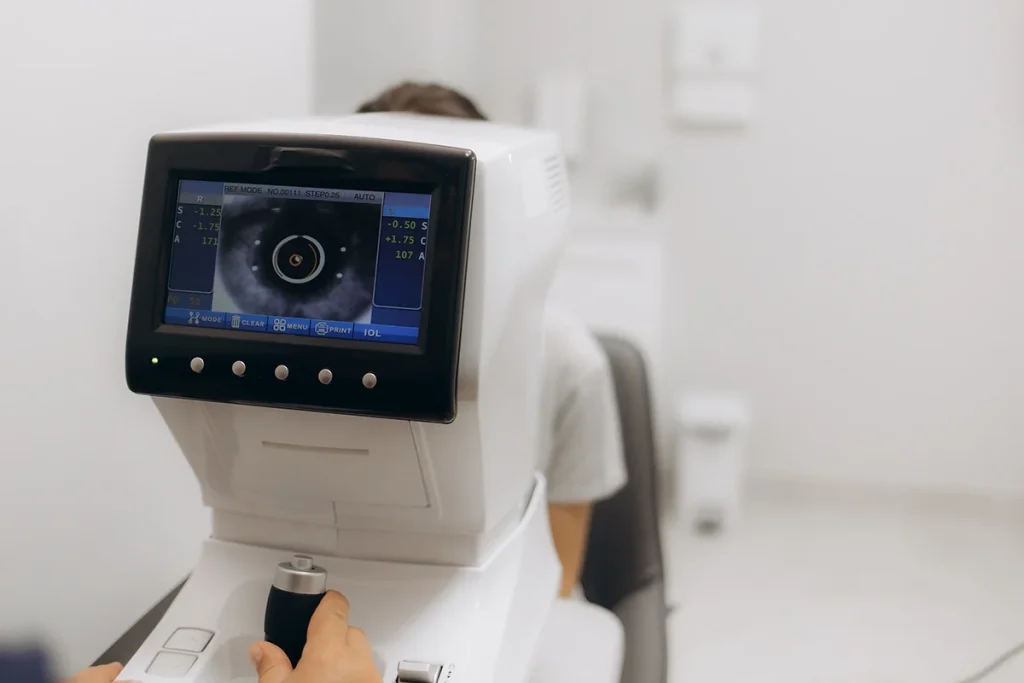
An eye examination is a medical evaluation that is vital for protecting eye health and assessing visual function. It is performed not only in people with visual complaints, but also as part of routine health check-ups. Early diagnosis of eye diseases helps prevent vision loss and allows treatment to begin at the right time.
What Is an Eye Examination and When Is It Performed?
An eye examination is a comprehensive evaluation that aims to detect visual disorders and eye health problems at an early stage. During this examination, performed by ophthalmologists, visual acuity, intraocular pressure, retina, cornea and optic nerves are examined in detail.
The timing of routine check-ups is determined according to age and risk factors, helping to prevent possible eye diseases.
An urgent eye examination is recommended in the presence of symptoms such as headache, blurred vision, double vision or sudden vision loss. With early diagnosis, the progression of serious conditions such as glaucoma, cataract, diabetic retinopathy and age-related macular degeneration can be prevented. I recommend regular eye examinations at different intervals for every age group.
Purpose of an Eye Examination
An eye examination is a medical procedure in which the anatomical structures of the eye are examined in detail and visual capacity is tested. Its main purpose is to detect visual disorders, identify eye diseases at an early stage and maintain healthy vision.
According to the World Health Organization, the treatment success rate of eye diseases detected early is over 80%. Eye examinations are also routinely performed to determine whether glasses or contact lenses are needed. I recommend more frequent examinations for individuals with a family history of eye disease.
Which Symptoms Require an Eye Examination?
Symptoms such as blurred vision, double vision, eye pain or redness are among the conditions that require an eye examination. Headache, light sensitivity or sudden changes in the visual field may indicate the need for an urgent eye examination.
In children, signs such as eye misalignment, frequent blinking or watching television from a very close distance may be warning signs for early examination. Sudden vision loss during pregnancy or in older age may indicate underlying systemic diseases.
People with chronic conditions such as diabetes or hypertension are advised to have an eye examination at least once a year.
How Often Should a Routine Eye Examination Be Performed?
For healthy adults, an eye examination is recommended every 2 years. After the age of 40, an annual eye examination is advised. In babies, the first eye examination is recommended within the first 6 months after birth and then periodically during childhood.
| Age Group | Recommended Examination Frequency |
|---|---|
| Babies 0–6 months | Within the first 6 months |
| School-age children | At the beginning of each school year |
| Healthy adults 18–40 | Every 2 years |
| Adults over 40 | Once a year |
| People with diabetes | Once a year, mandatory |
Things to Consider After a Dilated Eye Examination
After a dilated eye examination, blurred vision may continue for several hours. For this reason, driving and near-vision tasks are not recommended during this period. Since light sensitivity may occur, wearing sunglasses outdoors is recommended.
Children should take a break from playing or studying after a dilated examination. Activities that require attention should be avoided until vision returns to normal.
If burning or watering occurs in the eyes, washing the face or rubbing the eyes is not recommended. If the symptoms do not improve within a few hours, your doctor should be consulted.
In Which Cases Is the Use of Eye Drops Necessary?
The use of eye drops is necessary in cases such as retinal examination, first eye examination in children and suspected glaucoma.
In babies and newborns, a dilated examination is routinely performed for the early detection of lazy eye, refractive errors and congenital eye diseases. In individuals with a history of diabetes or hypertension, eye drops may be required for a detailed fundus examination.
In patients whose glasses prescription changes frequently, a cycloplegic refraction examination may be performed before prescribing glasses.
Eye Examination in Babies and Newborns: When and How Is It Performed?
Eye examination in babies is extremely important for preventing permanent vision loss. Thanks to examinations performed in the early period, serious diseases such as lazy eye, also known as amblyopia, congenital cataract and congenital glaucoma can be detected.
The first eye examination in newborn babies should be performed within the first week after birth. In high-risk cases, the examination should be performed immediately at birth.
During the eye examination, the eye structure, eye muscles, retina and optic nerve are evaluated in detail. Special techniques suitable for babies and newborns are used, and pupil-dilating drops may be applied when necessary.
When Is a Newborn Eye Examination Performed?
In babies with normal risk, the newborn eye examination should be completed within the first 72 hours after birth. For premature and low-birth-weight babies, a special examination for retinopathy should be performed within the first 4–6 weeks.
If there is a family history of congenital eye disease, ophthalmological evaluation is recommended as soon as the baby is born. With early diagnosis, conditions such as ROP, retinopathy of prematurity, congenital glaucoma and cataract can be detected quickly. Regular follow-up programs are important for protecting eye health.
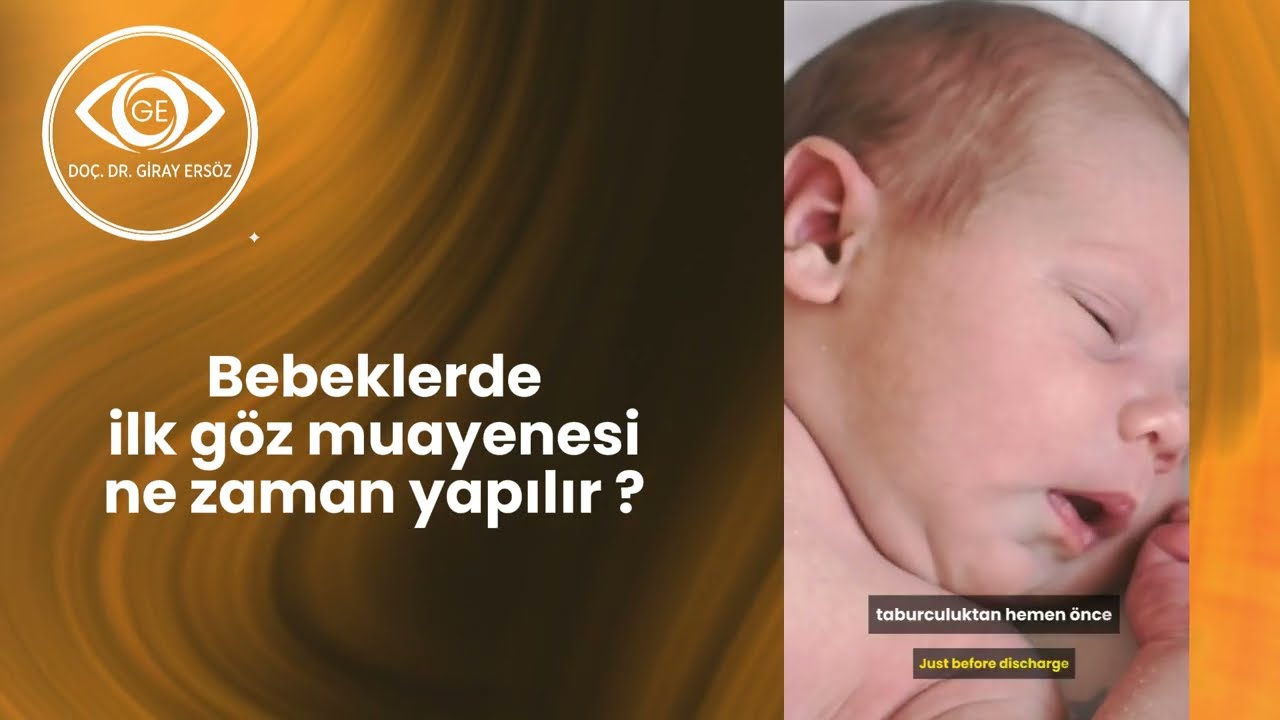
Timing of the First Eye Examination in Babies
The first eye examination in babies should be performed at birth or no later than the first month by a pediatrician or an ophthalmologist. During check-ups at 6 months and 1 year of age, refractive errors, strabismus and cataract can be detected early if present.
Before the age of 3, at least two eye examinations are recommended. Another examination should also be performed before starting school. These preschool routine examinations are important for future eye health. If there is any visual problem or a family history of eye disease, the frequency of examination may be increased.
How Is an Eye Examination Performed in Babies?
During a baby’s eye examination, special devices such as a penlight, ophthalmoscope and retinoscope are used. The lens and retina are first evaluated with the red reflex test. This method can also help detect cataracts and tumors.
The condition of the eye muscles and focusing ability can be assessed using moving toys or light. If necessary, pupil-dilating drops may be used for a detailed examination of the eye. During the examination, parental support and holding the baby in the correct position are important for the baby’s comfort.
Early Diagnosis of Childhood Eye Diseases
Common eye diseases in childhood include myopia, hyperopia, astigmatism and strabismus.
If amblyopia, also known as lazy eye, is not detected early in children under the age of 7, it may lead to permanent vision loss.
If congenital cataract is diagnosed early and treated surgically without delay, vision can be preserved. Color blindness should be detected before primary school so that it does not cause problems in the learning process.
Early diagnosis of eye infections and tear duct obstruction allows appropriate treatment to begin on time.

When Are Flashes of Light in the Eye Dangerous?
Sudden bright lights in the eye, short flashes similar to lightning, or a sudden sensation [...]
Devamını OkuyunSep
What Causes Computer-Related Eye Strain?
Complaints of eye strain have increased noticeably as computers and other digital screens have become [...]
Devamını OkuyunAug
What Causes Straight Lines to Look Wavy?
Straight lines may sometimes no longer appear straight to the eye. If door frames, window [...]
Devamını OkuyunAug
What Is Smartphone Blindness? Can It Cause Temporary Vision Loss?
Have you ever noticed short-term vision loss in one eye after looking at your phone [...]
Devamını OkuyunJul
How Can I Tell If My Eye Prescription Has Increased?
Your eye prescription may change over time. Sometimes this change is not noticed immediately; instead, [...]
Devamını OkuyunJul
What Causes a Sudden Curtain-Like Shadow Over the Eye?
If you suddenly experience a darkening, shadowing, or closing sensation as if a curtain has [...]
Devamını OkuyunJul
How Is an Eye Examination Performed? When Should It Be Done in Babies and Children?
An eye examination is a medical evaluation that is vital for protecting eye health and [...]
Devamını OkuyunJul
What Is Hyperopia (Farsightedness)? Causes, Symptoms and Treatment
Hyperopia is one of the most common vision problems seen both in Türkiye and around [...]
Devamını OkuyunJul