
There is no official retina specialist sub-branch in Turkey.
The retina, a crucial layer of the eye derived from the Latin word “rete” meaning network, plays a pivotal role in the vision process. Its primary function involves converting visual images into signals that the brain can interpret, representing the final stage of the intricate process of sight.
In this article, I will answer your questions about what is retina, who is called a retina specialist, is there a retina specialist in Turkey, what diseases do retina doctors treat and what equipment retina specialists use.

What is Retina?
The retina, akin to a sophisticated network layer resembling a wallpaper, spans the back of the eye. Comprising ten intricate layers, it stands as the eye’s most complex and sensitive region. Its pivotal role lies in the conversion of light into discernible image signals, seamlessly transmitting this visual information to the brain. This intricate process of transforming light into perceptible images forms the foundation of our ability to see, with the retina serving as the orchestrator of this remarkable visual symphony.

Who is Called Retina Specialist?
A Retina Specialist, though not officially recognized by title in Turkey, commonly refers to ophthalmologists who undergo additional training to excel in the advanced treatment of retina diseases. Among the public, terms like “retina specialist” or “retina doctor” are colloquially used for these highly skilled professionals. To enhance clarity for a broader audience, throughout the remainder of this article, I’ll use these terms interchangeably to refer to ophthalmologists specializing in Retina Diseases and Vitreoretina Surgery.
A Retina Specialist is a medical doctor with specialized training in diagnosing, treating, and performing surgeries for conditions affecting the retina and vitreous layers of the eye.
Personally, I became interested in Retinal and Vitreous diseases by being selected for the Retinal, Macular and Vitreous Diseases Surgery Clinical Researcher Training Program at the Istanbul Retina Institute in 2016. After completing the program and my training in 2018, I dedicated my expertise to the field, working as a specialist doctor at the same clinic until 2020. Subsequently, between 2020 and 2021, I contributed to the retina diseases unit at Koç University Eye Clinic. Presently, I continue my commitment to the specialized care of retina diseases and vitreoretinal surgery at Biruni University Hospital in Istanbul.
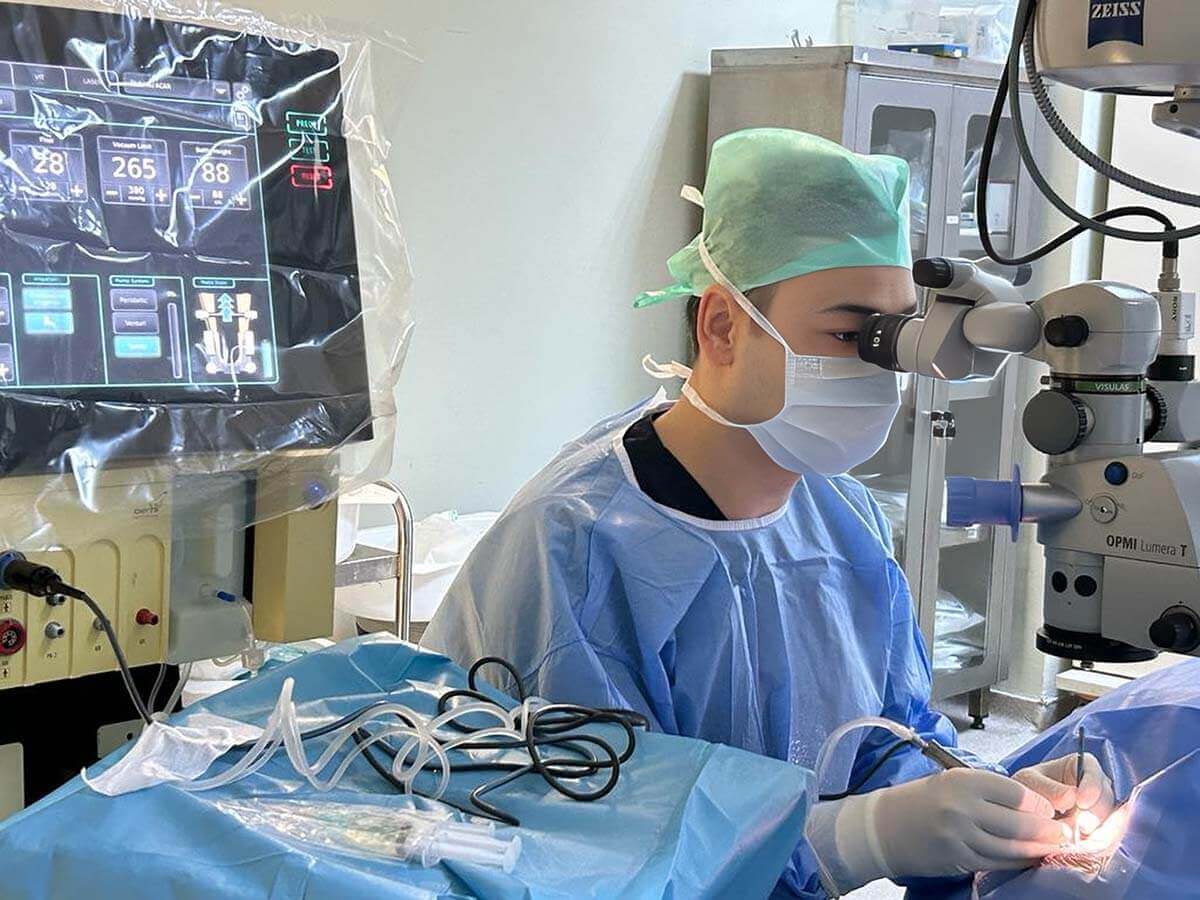
Comprehensive Care: A Glimpse into the Diseases Treated by Retina Specialists
Retina specialists, often referred to as retina doctors, specialize in the diagnosis and treatment of a diverse range of retina diseases. The conditions addressed by these highly trained professionals include:
- Treatment for Retina Tears
- Management of Retina Detachment
- Interventions for Macular Hole
- Vitrectomy Surgery
- Epiretina Membrane Treatment
- Utilization of Argon Laser for Treating Retina Diseases
- Macular Degeneration Therapies
- Central Serous Retinopathy Treatment
- Management of Retinopathy of Prematurity
- Treatment for Diabetic Retinopathy
- Therapies for Chicken Black Disease
These specialists employ a variety of advanced techniques and surgical procedures to ensure the best possible outcomes for patients facing these complex retina conditions.
Duties of a Retina Specialist (Retina Doctor)?
A Retina Specialist, colloquially known as a retina doctor, undertakes a multifaceted role in the realm of visual health, encompassing procedures such as intravitreal injections, laser therapies (including both argon and subthreshold lasers), photodynamic therapy, eye angiography, and vitreoretinal surgery. These specialists showcase their expertise in administering advanced treatments, utilizing precise techniques to address various retina conditions. With responsibilities spanning diagnostic procedures to intricate surgical interventions, retina specialists play a pivotal role in the comprehensive care and preservation of visual well-being for individuals facing diverse retina challenges.
Elevating Precision in Retina Care: The Vital Role of Advanced Equipment
The intricate landscape of diagnosing and treating retina and vitreous diseases demands the utilization of sophisticated technical equipment, setting retina doctors (retina specialists) apart with their extensive knowledge and expertise in employing these advanced tools. Unlike other ophthalmologists, they navigate a specialized realm where the precision of diagnosis and subsequent treatment relies heavily on cutting-edge equipment and tests. In the following sections, I elaborate on these state-of-the-art instruments and delineate their applications in diagnosing and treating various retina diseases.
OCT- OCT or eye tomography: It is instrumental in diagnosing and monitoring a broad spectrum of macular diseases as well as glaucoma.
Eye angiography: Eye angiography, conducted using fluorescein or indocyanine substances, distinguishes itself from cardiac angiography by its exclusive focus on diagnostic purposes and treatment follow-up. Unlike cardiac angiography, it does not involve procedures such as vascular opening, stenting, or ballooning. This specialized diagnostic tool reveals leakage in the retina and choroid vessels, contributing valuable insights for precise diagnosis and ongoing treatment monitoring.
Argon laser: Argon laser, employed for therapeutic purposes, serves as a valuable tool in addressing specific eye diseases and halting their progression.
Intraocular injection: It finds application in treating conditions including age-related macular degeneration, diabetic macular edema, and retinal vein occlusions.
Photodynamic therapy: It is applicable for conditions such as SSR (SSCR) disease and macular degeneration within the pachychoroid spectrum.
Vitrectomy – vitreoretinal surgery: This term collectively refers to all surgeries conducted within the vitreous.
Identifying symptoms of retinal diseases necessitates a comprehensive approach, acknowledging the potential overlap with other eye conditions. Accurate diagnosis involves a thorough consideration of all symptoms collectively, conducting meticulous examinations, and employing necessary tests as warranted. The following highlights some key symptoms associated with retinal diseases. While these symptoms may share similarities with those of other ocular conditions, a nuanced and individualized assessment is crucial for an accurate diagnosis. Consulting with a retina specialist ensures a meticulous examination and appropriate tests, facilitating a precise understanding of the underlying retinal health issues.
- Broken or crooked vision: Macular hole, CSCR (central serous chorioretinopathy), macular degeneration, ERM, macular edema.
- Decreased vision: All macular diseases.
- Vision loss: Retinal detachment, intraocular hemorrhage, retina vascular occlusion.
- Flashes of light: retinal tear, retinal detachment.
The presence of the mentioned symptoms does not definitively point to a particular disease. For the most accurate diagnosis and tailored guidance, consulting a retina doctor is recommended. Their specialized expertise and thorough evaluation can help pinpoint the underlying causes of these symptoms, ensuring a precise understanding of the individual’s retinal health.

The Benefits of Wearing Sunglasses and How to Choose Them
Wearing sunglasses plays a vital role in protecting our eye health. However, choosing the wrong [...]
Devamını OkuyunSep

The Effects of Eyelash Trimming on Eye Health
Trimming eyelashes has recently gained popularity on social media, especially among men. While it may [...]
Devamını OkuyunSep

The Benefits of the Mediterranean Diet for Macular Degeneration
Diet plays a significant role in slowing the progression of macular degeneration, and the Mediterranean [...]
Devamını OkuyunApr

What is Dry Eye? Tips to Protect Yourself from Dry Eyes
Insufficient tear production can lead to discomfort and reduce your eyes’ ability to defend against [...]
Devamını OkuyunJan

Understanding the Structure of the Eye and Its Functions?
Understanding the anatomy of the eye is crucial for diagnosing and treating various eye conditions. [...]
Devamını OkuyunJan

Causes and Treatment of Eye Floaters
Occasionally, individuals may notice floating objects in their field of vision. These can take various [...]
Devamını OkuyunMay

What is Vitreous? How is Vitreous Dysfunction Treated?
Vitreous, derived from the Latin term meaning “glassy,” is a clear gel found between the [...]
Devamını OkuyunMay

Vision Wellness Essentials: Simple and Effective Tips for Eye Health
Our eyes, vital and health-sensitive organs, demand special care to combat conditions such as eye [...]
Devamını OkuyunJan