
The field of ophthalmology employs numerous methods for treating eye diseases, and the applications of some treatments have evolved over time. Photodynamic therapy (PDT) is one such method, first introduced to ophthalmology in 1990. In 2000, the drug Visudyne, containing the active ingredient Verteporfin, received FDA approval for the treatment of macular degeneration. Since then, PDT has also been widely used in managing conditions such as central serous chorioretinopathy (CSR) and certain types of eye tumors.
What is Photodynamic Therapy (PDT)?
Photodynamic therapy (PDT) is a specialized treatment involving the intravenous administration of a light-sensitive drug called Visudyne (Verteporfin), followed by the application of a low-power, long-duration infrared laser with a wavelength of 689nm. Unlike traditional lasers, the low-power laser used in PDT does not generate heat, eliminating any thermal or burning effects. For this reason, PDT is often referred to as a “cold laser” treatment. Additionally, it is commonly called “medicated eye laser” due to the intravenous drug administration preceding the laser application. The primary goal of PDT is to target and destroy abnormal blood vessels originating from the choroid layer, a vascular-rich tissue that nourishes the retina.
For more detailed insights about macular degeneration and its treatment, feel free to read my article: “Macular Degeneration: Understanding its Origins, Symptoms, and Treatment?”
How is Photodynamic Therapy (PDT) Applied?
Before starting photodynamic therapy, the patient’s pupil is dilated using special eye drops. In the standard PDT procedure, the required dose of Visudyne (6 mg/m²) is calculated based on the patient’s body surface area, which is determined by their height and weight. This dose is then administered intravenously over a period of 10 minutes.
Following the infusion, a 5-minute waiting period allows the medication to reach the target areas. An anesthetic eye drop is then applied, and a lens is positioned on the eye. The laser is directed to the treatment area for 83 seconds, using specific settings: 50 J/cm² for fluence and 600 mW/cm² for irradiance.
For certain conditions, PDT can be performed at reduced efficiency. Depending on the disease’s type and severity, one of the following modified approaches may be used:
- Half-Dose PDT: 3 mg/m², 50 J/cm², 83 seconds
- Half-Fluence PDT: 6 mg/m², 25 J/cm², 83 seconds
- Half-Time PDT: 6 mg/m², 50 J/cm², 43 seconds
These adjustments allow for a more tailored treatment approach while maintaining therapeutic effectiveness.
What Should Be Done After Photodynamic Therapy (PDT)?
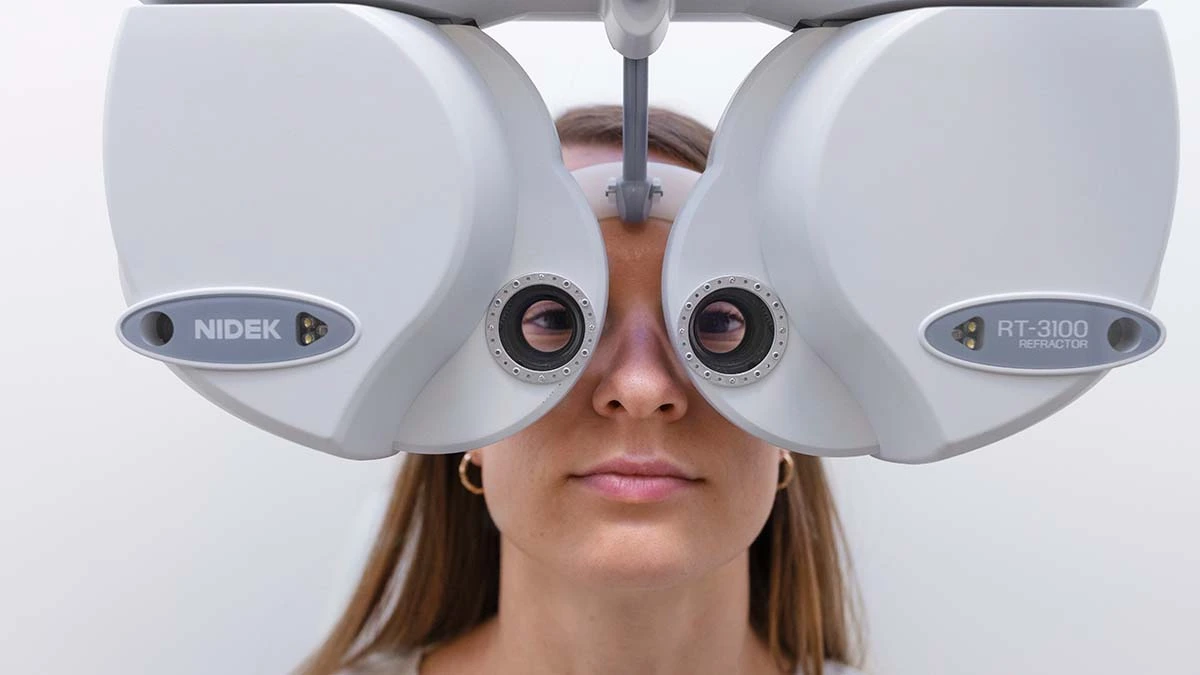
Following photodynamic therapy, patients must avoid exposure to light for three days. To ensure proper protection, they are advised to wear long-sleeved clothing, bring a wide-brimmed hat, and use sunglasses when attending the procedure.
What Are the Risks of Photodynamic Therapy (PDT)?
Photodynamic therapy does not carry a risk of vision loss. However, some patients may experience a temporary reduction in visual acuity during the first week after treatment. This effect is typically short-lived.
Which Eye Diseases Can Be Treated with Photodynamic Therapy (PDT)?
Photodynamic therapy (PDT) is most commonly used to treat central serous retinopathy (CSR). However, it can also serve as a supportive treatment for various other eye conditions. The application method and duration of treatment vary depending on the specific eye disease. Below, I’ve outlined the eye conditions for which PDT is used and how it is applied.
For more detailed information on Central Serous Retinopathy (CSR), you can read my article: “Central Serous Retinopathy (CSR): Symptoms and Treatment Options“
Macular Degeneration
Photodynamic therapy was initially developed for treating wet age-related macular degeneration (AMD). However, the primary treatment for this condition today is intraocular anti-VEGF injections.
In certain subtypes of macular degeneration, such as pachychoroid neovasculopathy and polypoidal choroidal vasculopathy, which are part of the pachychoroid spectrum (also encompassing CSR), PDT is used as a supportive treatment. In these cases, half-efficiency PDT is typically applied alongside intraocular anti-VEGF therapy to enhance treatment outcomes.
For more details about macular degeneration, you can read my article: “Macular Degeneration: Understanding its Origins, Symptoms, and Treatment” If you’re interested in learning more about intraocular injections, check out my article: “What is Intraocular Needle Treatment? How it is Performed?”
Central Serous Retinopathy (CSR)
Photodynamic therapy is considered the gold standard treatment for central serous retinopathy (CSR). Typically, one of the half-efficiency PDT methods is selected based on the severity and extent of the disease.
The success rate of PDT for CSR is exceptionally high, ranging between 80% and 97%, with significantly lower recurrence rates compared to spontaneous recovery or subthreshold laser treatment.
For more information about CSR, you can explore my article: “Central Serous Retinopathy (CSR): Symptoms and Treatment Options?”
Choroidal Hemangioma
Choroidal hemangioma is a benign vascular tumor that can lead to vision loss in some cases due to fluid leakage affecting visual acuity. For this condition, photodynamic therapy is one of the primary treatment options and is applied at full efficiency.
The application method may differ slightly from the classical PDT procedure. Studies indicate that:
- 83% of patients achieve full recovery after the first treatment,
- 14% recover after the second treatment, and
- 3% require a third treatment to see complete results.
Photodynamic therapy remains a highly effective solution for managing choroidal hemangiomas and preventing further complications.
Other Conditions
Beyond the conditions already mentioned, photodynamic therapy is also used as a supportive treatment for the following diseases:
- Retinal Capillary Hemangioblastoma
- Choroidal Melanoma
- Choroidal Metastases
In these cases, PDT can help manage the disease and complement other primary treatment methods.
Frequently Asked Questions About Photodynamic Therapy (PDT)
What Are the Side Effects of Verteporfin (Visudyne)?
The most significant side effect of Verteporfin, the drug used in photodynamic therapy, is light sensitivity. Patients must avoid exposure to light and protect their entire body for the first three days after treatment. Failure to do so may result in sunburn-like lesions on areas exposed to light.
Another common side effect involves skin reactions at the injection site, occurring in 10% to 30% of patients. These reactions can include:
- Redness
- Swelling (edema)
- Pain
- Rash
Proper precautions and post-treatment care are essential to minimize these side effects.
Is Photodynamic Therapy (PDT) Painful?
No, photodynamic therapy is a painless procedure.
How Many Times Can Photodynamic Therapy (PDT) Be Performed?
PDT can be performed 3 to 6 times, with treatments spaced at least 3 to 6 months apart. The number of sessions depends on the type of application, the condition being treated, and the specific area targeted.
How Can Visudyne Be Obtained?
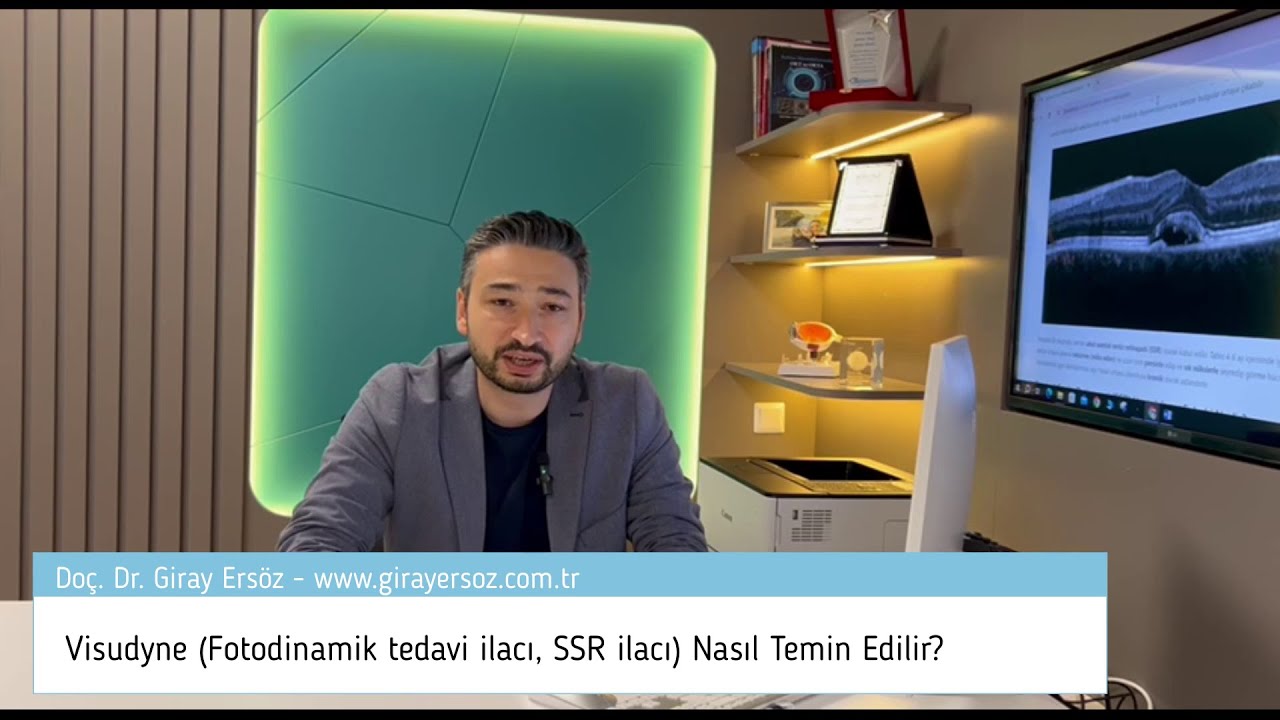
Since November 2020, there has been a significant global shortage in the production of Visudyne. Currently, only about 50 doses of Visudyne are imported into Turkey annually. Patients can obtain the medication through the Turkish Pharmacists Association by paying for it. However, due to ongoing production delays internationally, patients often face long waiting times to access the drug.
For a more detailed explanation of the Visudyne supply process, please refer to the video below.
My Scientific Studies on Photodynamic Therapy
Morphological and Functional Changes Immediately After Half-Time Photodynamic Therapy in Patients With Central Serous Chorioretinopathy (DOI: 10.3928/23258160-20181203-05)
This study, published in the highly regarded U.S.-based journal Ophthalmic Surgery, Lasers & Imaging Retina, examined the effects of photodynamic therapy (PDT) on patients with central serous chorioretinopathy (CSR). The findings revealed a temporary decrease in retinal function and an increase in subretinal fluid during the initial days following PDT. However, significant improvements were observed over time, with gradual recovery occurring between the first and third months post-treatment.

The Benefits of Wearing Sunglasses and How to Choose Them
Wearing sunglasses plays a vital role in protecting our eye health. However, choosing the wrong [...]
Devamını OkuyunSep
The Effects of Eyelash Trimming on Eye Health
Trimming eyelashes has recently gained popularity on social media, especially among men. While it may [...]
Devamını OkuyunSep

The Benefits of the Mediterranean Diet for Macular Degeneration
Diet plays a significant role in slowing the progression of macular degeneration, and the Mediterranean [...]
Devamını OkuyunApr

What is Dry Eye? Tips to Protect Yourself from Dry Eyes
Insufficient tear production can lead to discomfort and reduce your eyes’ ability to defend against [...]
Devamını OkuyunJan

Understanding the Structure of the Eye and Its Functions?
Understanding the anatomy of the eye is crucial for diagnosing and treating various eye conditions. [...]
Devamını OkuyunJan

Causes and Treatment of Eye Floaters
Occasionally, individuals may notice floating objects in their field of vision. These can take various [...]
Devamını OkuyunMay

What is Vitreous? How is Vitreous Dysfunction Treated?
Vitreous, derived from the Latin term meaning “glassy,” is a clear gel found between the [...]
Devamını OkuyunMay

Vision Wellness Essentials: Simple and Effective Tips for Eye Health
Our eyes, vital and health-sensitive organs, demand special care to combat conditions such as eye [...]
Devamını OkuyunJan